
Deep TMS referrals for Kansas City providers
Help your clients when meds aren’t enough.
Deep TMS referrals for the clients who aren’t moving, the research behind our trauma approach, and a quiet program for clinicians who are running low themselves.
The call and the tour are free and confidential. Nothing to decide on either.
Why we’re writing
The helpers are running low.
We made this video for KC providersBrad Ford, founder · 2 minutesFor your clients
The clients who aren’t moving are the heaviest part of a caseload.
In the STAR*D trial (Rush et al., American Journal of Psychiatry, 2006), about two in three people did not reach remission on their first antidepressant. Some of them are in your office every week, doing the work and not getting traction. Deep TMS was built for that client, and it runs alongside your therapy rather than in place of it.
The evidence. In the pivotal trial of the BrainsWay H1 coil, 32.6% of medication-resistant patients reached remission after four weeks of treatment, against 14.6% on sham. Levkovitz et al., World Psychiatry, 2015.
We work with most major plans, including Blue Cross Blue Shield of Kansas, UnitedHealthcare, Aetna, Cigna, Original Medicare and Ambetter. Plans vary, so we verify each client’s benefits.
When you refer
What happens to your client, step by step.
No black box. This is the path every referred client follows.
When trauma is underneath
For the clients EMDR and exposure work haven’t moved.
For clinician education. Deep TMS is not FDA-cleared for PTSD. Script-driven imagery paired with Deep TMS is a research-based approach; the studies are small and early.
Most of the people who come to us for depression are carrying trauma as well. For them we pair treatment with script-driven imagery, which will feel familiar if you do exposure work.
Isserles et al., Brain Stimulation, 2013 (pubmed 22921765). Milad and Quirk, Nature, 2002 (pubmed 12422216).
Read the full research summary →For you · Provider Burnout Program
Deep TMS, for the people who carry everyone else’s hardest days.
40%
of mental-health professionals score high on emotional exhaustion. O’Connor et al., European Psychiatry, 2018 (meta-analysis, 33 studies).
48%
of behavioral-health workers say staffing shortages have made them consider other work. National Council for Mental Wellbeing / Harris Poll, 2023.
0.80
correlation between exhaustion and depressive symptoms across 12,417 people. Bianchi et al., Clinical Psychological Science, 2021.
Burnout isn’t a diagnosis. Sometimes what’s under it is.
Burnout is an occupational state, and Deep TMS does not treat it. But when exhaustion has stopped responding to rest, supervision and time off, it’s fair to ask whether depression is part of the picture. If it is, and medication hasn’t resolved it, Deep TMS is FDA-cleared for major depressive disorder and covered by most insurance plans.
What the program includes
- A confidential phone consult. A real person answers, and there’s nothing to decide on the call.
- An insurance benefits check before you commit to anything.
- A video evaluation with our psychiatrist. You keep your own prescriber and therapist.
- About 20-minute visits that fit between clients. No sedation and no downtime.
The consult, benefits check and assessment are free. It’s the same offer we make to the public.
See it before you send anyone
Bring a colleague. Ask us anything.
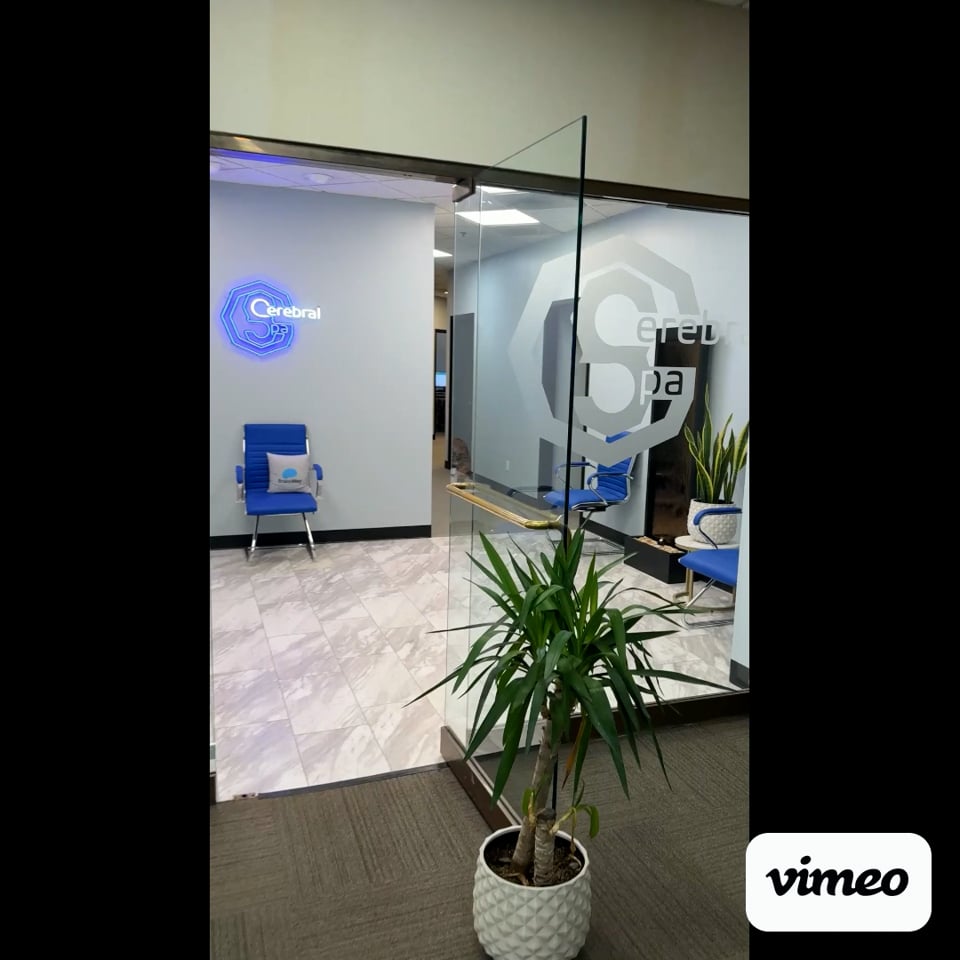

We’re at 7127 W 110th Street in Overland Park, just off I-435. Book a Provider Tour and we’ll set aside 30 minutes: see the room, meet the people your clients would meet, and decide for yourself.
Start with a twenty-minute call.
For you, or for a client. Free and confidential.
Book a confidential 20-minute callRather meet in person? Book a Provider TourDeep TMS is FDA-cleared for adults with major depressive disorder, including those with anxiety symptoms, who have not improved on antidepressant medication. It is not a treatment for burnout. TMS is available by prescription only. Results vary. Coverage depends on the plan and diagnosis.